
I’ve lived in Miami since 1979. Back then, the skyline was just a few buildings, and the city felt like a quiet retirement spot. Over the last 40-plus years, I’ve watched it transform into one of the most modern and beautiful cities in the world.
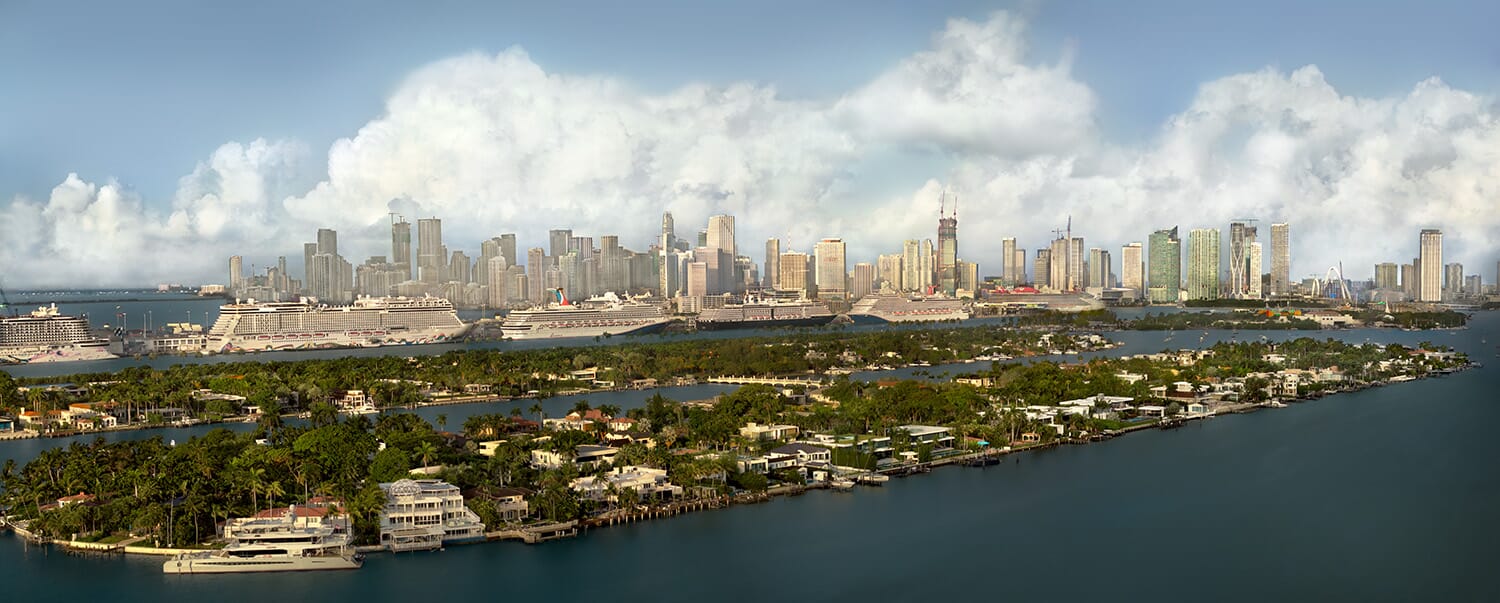
I truly love the architecture here, and living in such a beautiful place gives me endless chances to keep improving my work. When I took the Mavic 4 Pro out over Biscayne Bay recently, I wasn’t looking for a typical, bright postcard shot. I wanted something more refined—a clean, understated image that reflects the sophisticated feel of modern Miami.
I. The Strategy: Using Lens Compression
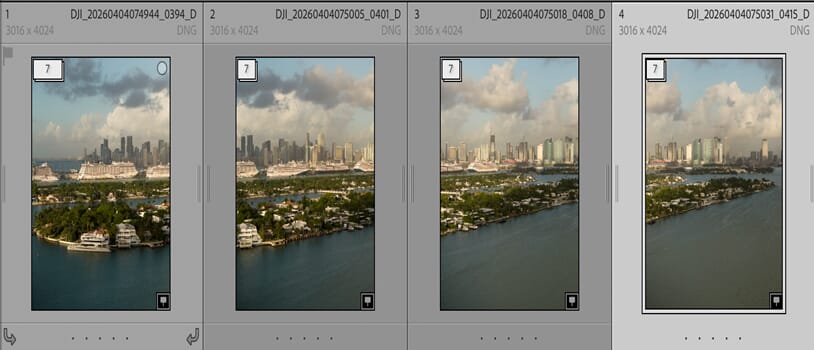
Most drone shots are very wide, which can make buildings look small and distorted. For this project, I used the Mavic 4 Pro’s 70mm telephoto lens. By staying further back and zooming in, I used “lens compression” to bring the islands and the downtown skyline closer together. I also shot in Portrait Mode, taking four vertical sections (or “tiles”) to make sure the buildings stayed perfectly straight and the final file had as much detail as possible.
II. The Technical Foundation: The Septa-Bracket Protocol
To get a high-quality print, you need a lot of clean data. To make sure this image was sharp enough for a large-format display, I used what I call the “Septa-Bracket Protocol.”
Instead of the usual 3-shot bracket, I took 7 shots for every section of the panorama. This allowed me to capture everything from the bright reflections on the glass towers to the deep shadows in the trees. By blending these 28 total frames, we removed the grain and “noise” you often see in drone photos, resulting in a very clean 449.3MB master file.
The Detail Check
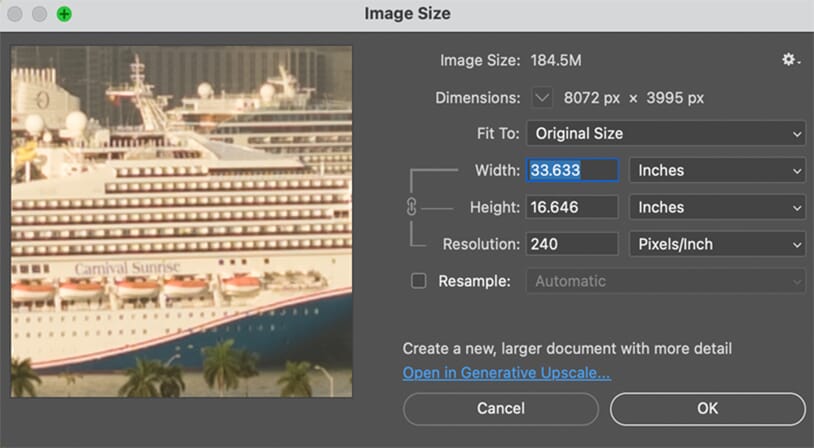
The final file is over 8,000 pixels wide. When printed at 11 x 28, it hits 300 DPI, which is the gold standard for high-end prints. From a few feet away, it looks soft and atmospheric, but when you get close, you can actually read the small labels on the ships in the harbor.
III. The Retouching: Two Visions with Picsera
I worked with the team at Picsera.com to avoid the “fake” look of automated HDR software. Because the raw data from the Septa-Bracket Protocol was so rich, we decided to develop the image in two distinct directions to see which best served the architectural narrative.
The “Silver-Haze” Version (The Architecture of Silence): By toning down the bright blues and shifting the sky toward a neutral, silvery slate, we created a look that is more about the light and the structures than the colors. The purpose of this style is intentionality; it is designed to complement a minimalist architectural interior or a high-end lobby without competing with the space for attention.
The “Classic Morning” Version (Vibrant & Commercial): This version leans into the vibrant “Teal and Orange” color theory that defines the Miami brand. The purpose here is commercial impact; it serves as a powerful marketing asset that sells the energy, the destination, and the aspirational lifestyle of the city.
In both cases, the retouchers manually blended the exposures using luminosity masks. This ensured that the neon signs on the ships remained crisp while the deep textures of the residential docks were revealed without looking “over-processed.”
IV. The Final Print: Quality You Can Touch
For the physical version, I chose Hahnemühle William Turner paper. It’s a heavy, 100% cotton paper with a texture that looks and feels like a watercolor painting. I worked with Artful Printers to produce the piece, finishing it with Hand-Deckled (torn) edges. It’s a small detail, but it makes the print feel like a custom, handmade object.
V. Sourcing the Build
Constructing a high-quality piece like this requires the right partners. Here is the team and the gear that made this possible:
| Component | Resource | Why it Matters |
|---|---|---|
| The Sensor | DJI Mavic 4 Pro | The 70mm lens was key for getting the right perspective. |
| The Retouching | Picsera.com | Hand-blended the shots for a clean, silver-haze look. |
| The Paper | Hahnemühle William Turner | Adds a high-end, tactile feel to the final print. |
| The Studio | Artful Printers | Experts in museum-quality printing and finishing. |
| The Advisors | Gemini & ChatGPT | Helped refine the technical and creative goals. |
VI. Conclusion: What’s Next
This project is just the start of how I’m using the Mavic 4. Miami is constantly changing, and I’m already scouting new spots to capture the city’s newest landmarks. I’m especially interested in the unique shape of the Waldorf Astoria Tower downtown, the clean design of the new Safra Bank in Aventura, and the impressive new Mandarin Oriental Residences on Brickell Key.
Let’s Work Together:
- For Architects & Developers: If you have a project in Miami or anywhere else, I’d love to help you capture it. We have a global network of professional photographers, so we can handle shoots anywhere in the world with the same attention to detail you see here.
- For Photographers: If you have a great shot but need help with the technical side—like the Septa-Bracket workflow or manual retouching—let’s talk. I can help you turn your raw files into high-end architectural images that your clients will love.
Frequently Asked Questions
How do you get so much detail in a drone photo?
By using a longer lens and taking multiple overlapping shots (a panorama), you can create a file that is much larger and sharper than a single standard photo.
What is the Septa-Bracket Protocol?
It’s a method of taking 7 different exposures of the same scene to make sure you have enough light data to keep the image clean and clear, even in difficult lighting.